









Dark Kitchen Corners: Add Light Without Major Wiring
Dark kitchen corners can make an otherwise comfortable room feel smaller and harder to work in. Shadows commonly appear beneath upper cabinets, beside tall refrigerators, around pantry entrances, and at the ends of long counters. Fortunately, adding useful light doesn’t always mean opening walls or installing new circuits. Several simple lighting changes can brighten problem areas with little disruption.
Identify Why the Corner Looks Dark
Before buying another lamp, determine what is blocking or missing light. Deep cabinets may create shadows on counters, while dark paint or matte surfaces can absorb much of the available illumination.
Check the area during daytime and after sunset. If the corner becomes problematic only at night, task lighting may be enough. Exploring broader kitchen improvement topics can provide useful context for coordinating lighting with work areas.
Separate Task Light From General Light
A bright ceiling fixture doesn’t guarantee good visibility on the counter. Your body or upper cabinets may block that overhead light exactly where you chop, measure, or prepare food.
Task lighting targets the surface directly rather than trying to brighten the entire room.
Add Plug-In or Rechargeable Task Lighting
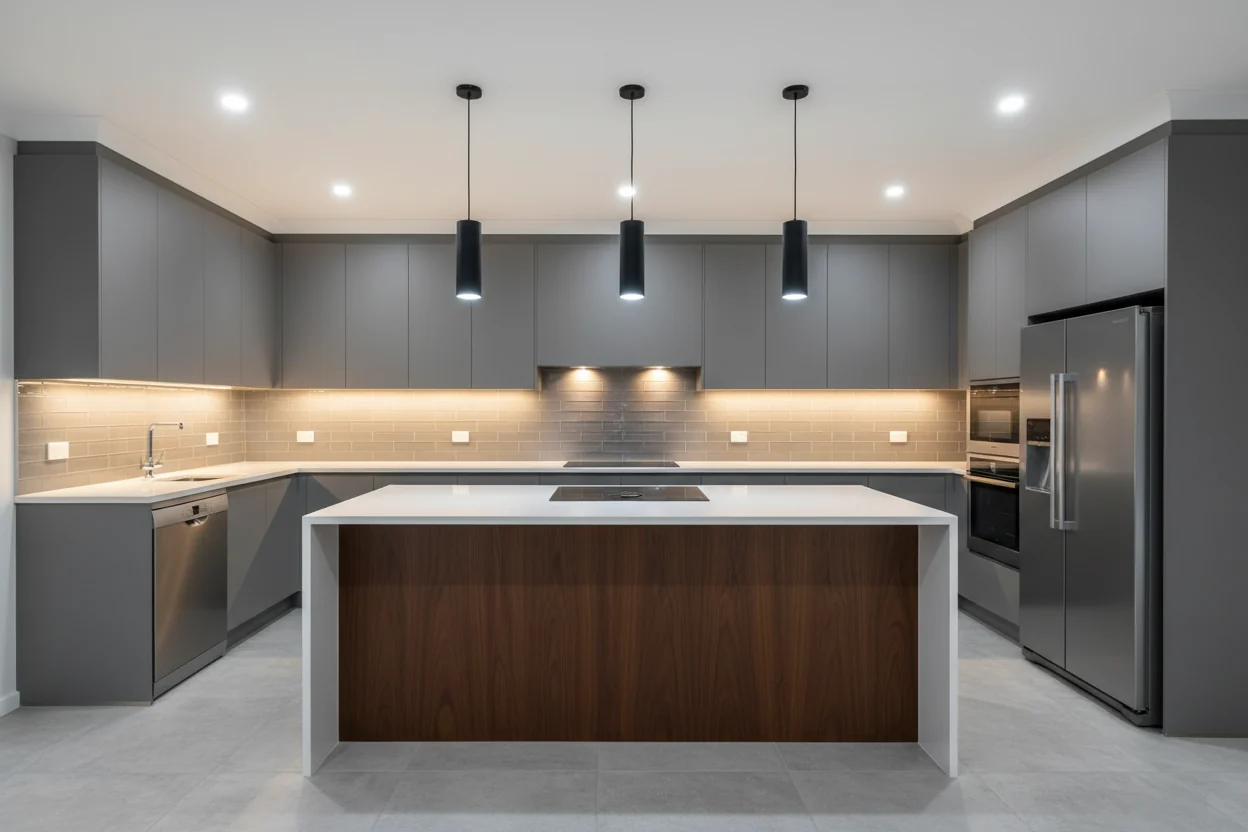
Under-cabinet light bars are one of the easiest ways to brighten shadowed countertops. Plug-in versions provide consistent power, while rechargeable models avoid visible cords and can work where outlets are inconvenient.
Choose fixtures that spread light across the surface rather than creating one harsh bright spot. Thoughtful practical home ideas can also help when you want improvements that don’t require permanent alterations.
| Dark Area | Low-Disruption Option | Main Advantage |
|---|---|---|
| Under cabinet | Light bar | Direct counter lighting |
| Pantry corner | Rechargeable puck | No wiring needed |
| Open shelf | Small LED strip | Even illumination |
| Counter end | Plug-in lamp | Flexible placement |
Use Reflective Surfaces to Spread Existing Light
Sometimes the room has enough light, but darker finishes prevent it from traveling. A pale backsplash, lightly reflective tile, glossy accessory, or mirror-like detail can bounce illumination toward a shaded area.
This doesn’t mean every surface needs to shine. A small reflective element can be enough. Reviewing lighting and décor inspiration may help you combine brightness with finishes that still suit the kitchen.
Clear Objects That Create Extra Shadows
Tall countertop appliances, stacked cutting boards, decorative signs, and utensil containers can interrupt light. Moving one large object may improve a corner more than adding another fixture.
Consider Small Lamps Where They Are Safe
A compact kitchen lamp can provide warm localized light on a dry section of counter, sideboard, or open shelf. Keep cords and fixtures away from sinks, hot burners, and areas where they could be knocked over.
Plug-in wall sconces are another option when you need more directed light but don’t want electrical work. Cord covers can make the installation look tidier.
Lighting Mistakes That Can Make the Problem Worse
The brightest bulb isn’t always the best solution. A single intense source can create glare while leaving nearby surfaces in deeper shadow.
Color temperature matters too. Mixing several noticeably different types of white light can make the kitchen feel visually uneven. Instead of adding fixtures randomly, concentrate on the places where visibility is poor and choose lighting that works comfortably with what is already installed.
Frequently Asked Questions
Are rechargeable kitchen lights worth using?
They can work well for small areas where running a cord is inconvenient. Their main limitation is charging frequency, so they are often better for occasional task lighting than for areas that need hours of illumination every day.
Where should under-cabinet lights be positioned?
Placement toward the front underside of the cabinet often spreads light more effectively across the working surface. Exact positioning depends on the fixture design, counter depth, and backsplash reflectivity.
Can lighter paint make a dark kitchen brighter?
Lighter finishes can reflect more available light and reduce the heavy appearance of shaded areas. Paint alone won’t replace adequate task lighting, but it can make existing illumination work harder.
Light the Work Surface, Not Just the Room
Begin with the corner where poor visibility bothers you most. Remove anything blocking light, then test a rechargeable or plug-in task fixture before considering permanent electrical work. Dark kitchen corners often need targeted illumination rather than a brighter ceiling. Solving the specific shadow usually produces a more comfortable result with far less expense and disruption.